
“We regularly use BeTranslated's translation services and are very satisfied with their work. The team is professional and highly efficient! We highly recommend them.”
Shangri-La P.
Google review (FR), 2 years ago
Translated from French
Learn how to rank in any country, including markets that do not speak English, from keyword research, hreflang, and URL architecture to content strategy and the AI visibility layer most agencies miss.
Quick Answer
International SEO is the practice of optimizing a website so search engines serve the right language and regional version to each market. It covers hreflang tags, localized keyword research, URL structure, in-market content, and local link building. Done well, it wins organic traffic in markets that do not speak English.
Each pillar is a separate discipline. Most agencies handle one or two. We handle all six.
Translating your English keyword list produces a list of phrases real users rarely type. Every target market requires fresh native-language research using regional search data, not a dictionary pass over your existing terms.
Hreflang tags tell search engines which page is for which language and region, so the right version reaches the right searcher. Getting the syntax, scope, and return-tag logic right is non-trivial.
Subdirectories on a single domain (betranslated.com/fr/) outperform subdomains (fr.betranslated.com) for most businesses because they consolidate domain authority. ccTLDs (betranslated.fr) make sense at scale with dedicated budgets.
Content written natively in the target language outperforms translated content on both quality and ranking signals. Localization extends beyond words: imagery, tone, cultural references, units, currency, and date formats all affect bounce rate.
Domain authority earned from English-language sites does not fully transfer to your French or German pages. Each language version needs backlinks from publishers in that market. Local PR, directory listings, and partnerships build country-specific authority.
ChatGPT, Gemini, and Perplexity now answer commercial queries before users reach a search results page. Structured data, authoritative content, and brand mentions in local language publications determine whether your brand appears in these AI responses.
Why International SEO Matters
Sources: eMarketer, Global E-commerce Forecast 2025; LinkedIn / Multilingual SEO Statistics, 2024.

Reaching international customers used to take a big budget and an even bigger team. Not anymore. With e-commerce expanding fast and AI reshaping how people find products and services, small and mid-sized businesses can now compete for buyers anywhere in the world, provided they get their international SEO right.
Around 58% of internet users shop online, and global digital sales are projected to reach $6.9 trillion in 2025.
When I started working with multilingual websites in the early days of BeTranslated, the advice was simple: translate the page, add a language switcher, call it done. Years of watching rankings tank, and then recover, taught me that international SEO is a different discipline entirely. Translating your content is step one of maybe fifteen.
The ground has also shifted under everyone's feet. Optimizing for Google and Bing is no longer the whole game, because large language models like ChatGPT, Gemini, and Claude now shape how people research purchases, often before they visit a search engine at all.
Successful international SEO means making your website visible and relevant across every country, language, device, and search environment. Websites built only with English and Google in mind are already leaving international traffic on the table.
Below is the practical framework we use to help websites rank across multiple countries and languages. It covers keyword research, content localization, technical SEO, schema markup, and link building.
Before getting into the mechanics, one foundational point is worth making explicitly: SEO alone does not cut it. Without quality content behind it, your SEO work attracts visitors who leave immediately because there is nothing worth reading.
Quality content without SEO has the opposite problem. It sits unread: well written, well structured, and completely invisible.
International SEO amplifies both sides of that equation. When you expand into new language markets, you are not just translating words; you are rebuilding the SEO and content relationship from scratch in each market.
A well-structured SEO strategy strengthens a site's authority, gets pages indexed, and helps content climb the rankings over time. Search engines update their algorithms constantly, so staying current with ranking signals such as user behavior, technical optimization, and link building is part of the ongoing work.

People often confuse website translation with website localization, and the difference matters more than most realize. Website translation converts your existing written content into another language. Website localization goes further: it adapts the entire experience for a target market, including images, design elements, cultural references, currency formats, and tone.
If you are on a tight budget, translation alone can get you started. If you want to rank and convert in a foreign market, localization is what separates the sites that perform from the ones that sit unnoticed.
One thing is non-negotiable regardless of budget: human translators. Native speakers can tell the difference between a text that has been machine-translated and one written by an experienced bilingual professional.
It is worth being precise about the search risk, because the usual version of this claim is wrong. Google's spam policies do not list machine-translated text as a violation. What they do target is scaled content abuse: pages generated in volume "for the primary purpose of manipulating search rankings and not helping users," which can rank lower or not appear at all.
Machine translation only lands there when it is used to mass-produce pages nobody checked. A translated page that is genuinely useful is not penalized for having started in a machine.
The bigger cost is nuance: the phrases people actually use to search in that language, the cultural context that makes content feel trustworthy, and the register that suits a legal document versus a product page. An Indian translator, for instance, knows that "contact center" and BPO (Business Process Outsourcing) are interchangeable in their market, and knows when to use each for maximum SEO value.
If you are looking for professional website translation services that keep your SEO intact, we can help.
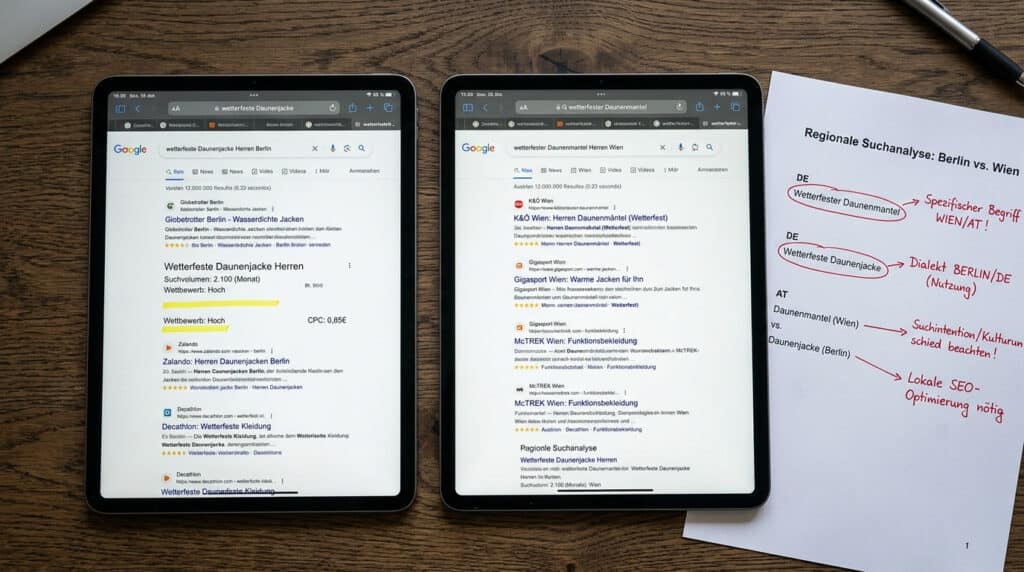
Keyword research is where most international SEO campaigns get off to a bad start. The instinct is to take your best English keywords, plug them into a translation tool, and use whatever comes out. That almost never reflects what people in the target market are actually searching for.
Search behavior is culturally shaped. People in Germany phrase product queries differently from people in Austria, even though both markets use German, and French speakers in Belgium use different vocabulary from those in France.
You need to perform keyword research for each country and language you target, not just translate your existing keyword list. Tools like Ahrefs, SEMrush, and Moz let you filter keyword suggestions and search volume by language and location, so use them to answer the real question: what are people in this specific market searching for, and in what words?
Pairing an SEO strategist with a native-speaker translator is the most reliable way to handle unfamiliar-language keyword research. It is also how our multilingual keyword research service works.
Do not forget metadata. Title tags, meta descriptions, and image alt text all need to be translated and optimized for each target language. Localized metadata is one of the cheapest changes you can make to a multilingual site, and one of the most effective.

Once you know what your target markets are searching for, the next step is planning how and when you publish. A content calendar is a roadmap for consistency and relevance.
Map out topics based on your localized keyword research and the search trends in each market. Every piece you publish should be relevant to your audience there and optimized for the search terms they actually use.
The approach varies by industry. A legal translation agency targeting a new European market might focus on jurisdiction-specific terminology and local regulatory content, while an e-commerce brand might plan content around seasonal shopping trends in each country.
A SaaS company might prioritize tutorials and comparison pages localized for each language audience. Planning around a local calendar puts your content in front of people at the moment they are looking for it, which is what actually drives rankings and conversions.

One of the most effective structural approaches for multilingual SEO is the content hub model. A pillar page covers a broad topic in depth, and cluster articles (shorter, more specific pieces) link back to that pillar and to each other.
Search engines read that internal linking structure as a signal of topical authority. When you replicate it in each target language, you are not just translating content; you are building a topical authority footprint in that market.
A translation agency targeting the French market, for example, might build a pillar page around "services de traduction professionnels" with cluster articles on legal translation, marketing translation, and technical translation, all internally linked and localized for French search behavior. The hub structure improves navigation and builds the kind of global search visibility that isolated pages cannot replicate.

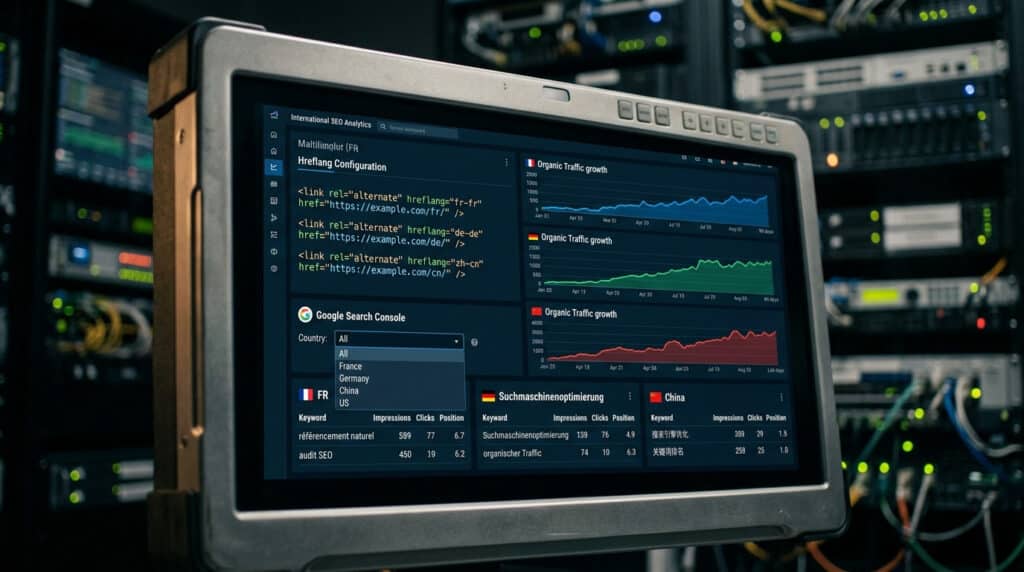
One of the most common technical mistakes on multilingual websites is failing to implement hreflang tags correctly. When you have content in multiple languages, search engines need to know which version of a page to serve to which user.
Missing hreflang is not a penalty, and it is worth saying so plainly. Google's documentation on localized page versions says it "might still find alternate language versions of your page" without any annotation at all.
What you lose is control. Google picks which version to show, and it may serve your English page to a French searcher who would have converted on the French one.
Its duplicate-URL guidance describes the same mechanism for near-identical pages: one gets chosen as canonical, and the others are filtered out of results. That is lost traffic, not a demotion.
Hreflang is an HTML attribute that signals the language and geographic target of each page. It looks like this: hreflang="fr-be" for French speakers in Belgium, or hreflang="de" for German speakers regardless of country.
A few rules keep it working. Hreflang targets specific countries, not broad regions, so you can target France or Germany but not "Europe." Every language version of a page must reference all the other versions in its set, including itself, and an x-default tag marks the fallback page for users who match no specific language or region.
You can add hreflang tags in the page's HTML head, in your XML sitemap, or via HTTP headers. If you run a WordPress site, WPML handles hreflang automatically across your language versions, which is one reason so many multilingual sites run on it.
For a technical review of your own setup, our hreflang and geo-targeting service covers the common errors and how to fix them.

How you structure your URLs has a direct impact on how search engines and users perceive the geographic relevance of your content. Three main approaches exist.
Country-code top-level domains (ccTLDs) give you the clearest geographic signal: a .de domain tells Google you are targeting Germany. The trade-off is cost and complexity, because you need to purchase, maintain, and build authority for each separate domain.
Subdirectories on a generic TLD (for example, betranslated.com/de/) keep your domain authority consolidated and are easier to manage. Search Console retired its country-targeting setting in 2022, so hreflang and in-market signals such as local links, currency, and contact details now tell Google which country each subdirectory serves.
Subdomains (de.betranslated.com) offer a middle ground, though Google tends to treat subdomains more like separate sites than subdirectories.
For most growing businesses, subdirectories on a single domain are the most practical starting point. For established brands targeting a handful of key markets long-term, ccTLDs can be worth the investment.

Schema markup is structured data that helps search engines and AI tools understand what your page is actually about, not just what it says. For multilingual websites, it gives you two meaningful advantages.
First, it increases your chances of earning rich results in Google, such as review stars, breadcrumbs, and event details. Second, and increasingly important, it helps AI-powered search tools like Google AI Overviews, ChatGPT, and Perplexity identify your content as a trustworthy source worth citing.
AI-powered search relies on structured data to pull relevant answers quickly. If your content uses schema correctly, you stand a much better chance of appearing in AI-generated responses, especially for multilingual queries where language, location, and expertise all need to be clear.
For an international website, the most useful schema types are Organization (company details, logo, contact information), FAQPage (question-and-answer content), Article or BlogPosting (content type, author, publish date), BreadcrumbList (site structure), and LocalBusiness (region-specific services or offices).
Implement schema as JSON-LD in your page's head section, then validate it with Google's Rich Results Test. Our multilingual SEO team can handle schema markup as part of a broader SEO engagement.
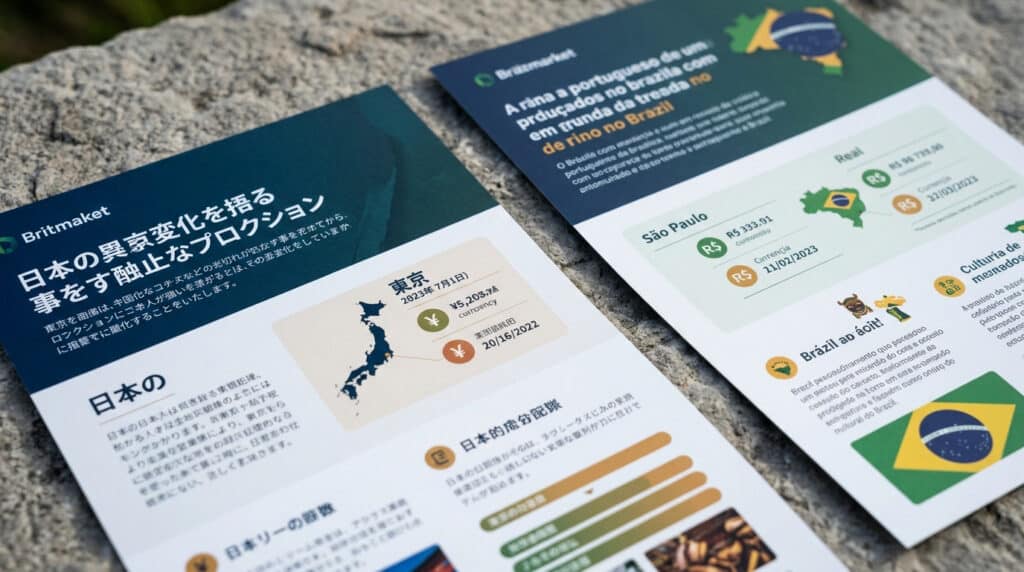
Content localization is what transforms a translated website into one that actually feels native to its audience. It goes beyond swapping out words: cultural references, imagery, date formats, currency symbols, legal disclaimers, and tone of voice all need to match the expectations of the market you are targeting.
60% of consumers prefer viewing websites in their native language, and companies that localize their content see conversion rate increases of up to 70%.
A 70% conversion rate increase is not marginal. Multimedia needs the same care: videos need voiceovers or subtitles in the target language, and infographics with embedded text need redesigning, not just overlaying.
Images should reflect the visual culture of your target market wherever possible. If your site carries translated infographics or subtitled video content, the same keyword and localization principles apply to those assets too.
Include alt text on every image, using localized keywords where they fit naturally. For videos, add captions and transcripts in the target language, both for accessibility and to give search engines more indexable content to work with.
For a full breakdown of services covering text and audiovisual content, see our audiovisual translation services.

Backlinks from websites in your target country and language send local relevance signals that are hard to replicate any other way. A link from a well-regarded French business publication tells Google your French content belongs in French search results.
The work involved is real. You need to write guest posts in the target language, run outreach with local publishers, and build relationships with businesses and organizations in each market, which means your translation team is part of link building too, not just page creation.
Complementary tactics include creating Google Business Profiles for each location you serve, getting listed in country-specific directories, and engaging your target audience on the social platforms they actually use. Our multilingual content marketing work covers the point where link building and content production meet.

International SEO involves a lot of moving pieces: keyword research per language, hreflang setup, URL structure decisions, content localization, schema markup, and local link building. The planning matters, but execution is what gets you rankings.
Start with the markets that offer the best return, researching competitor presence, search volume, and conversion likelihood before committing resources. Then build out one market at a time rather than trying to launch ten languages simultaneously.
Measure everything. Use Google Search Console with country filters, and set up separate tracking views for each language version of your site, so the data tells you which markets to double down on and which to deprioritize.
Pay attention to engagement signals too: time on page, scroll depth, and bounce rate show whether your localized content is resonating or just showing up. If visitors leave quickly, the keyword targeting is usually off, the localization is thin, or the user experience does not suit that market.
Track keyword rankings per market using tools like Ahrefs Rank Tracker or SEMrush Position Tracking, and check conversion rates to understand whether traffic is turning into real business outcomes.
Refreshing existing content is also part of the work. Updating localized pages with new data, current market context, or improved keyword targeting keeps them relevant and signals that the site is actively maintained. A page that ranked well two years ago in German or Dutch may need a refresh as local search behavior evolves and competitors improve.
At BeTranslated, our language teams cover French translation, German translation, Dutch translation, Spanish translation, and Chinese translation, among many other pairs, combining professional translators with multilingual SEO know-how so your content ranks and converts. For a free, no-obligation quote, contact us today.
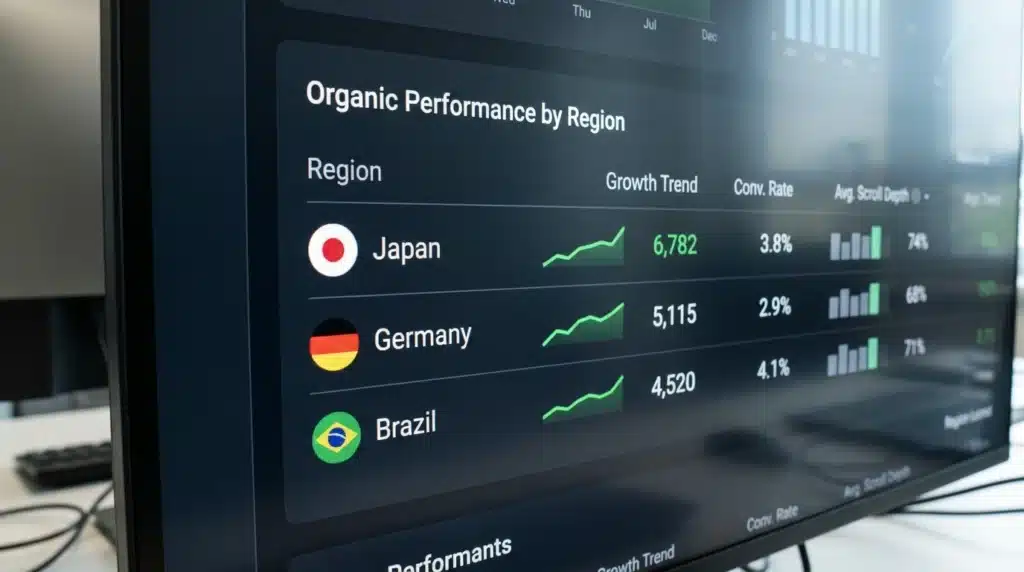
You are doing the work, but how do you know it is paying off? Setting clear KPIs before you launch each market makes it possible to evaluate what is working and where to adjust.
Organic traffic growth is the most direct indicator. If more visitors find your localized pages through search engines in each target country, your keywords, backlinks, and content are doing their job.
Engagement metrics tell you whether visitors actually want what they found. High bounce rates on a newly localized page often signal a mismatch between the keyword that brought the visitor and the content they landed on, which is a localization quality problem as much as an SEO one.
Conversion rate is the bottom-line metric: are readers in each market requesting a quote, signing up, or making a purchase? Content that converts in one language market may need different messaging, tone, or calls to action in another.
Keyword rankings per market, tracked over time in Ahrefs keyword reports or SEMrush keyword reports, show how your localized content performs against local competitors. Use Google Search Console filtered by country to see impressions, clicks, and average position for each language version of your site.
Most SEO agencies outsource the language work. Most translation agencies do not understand search intent. The gap between those two disciplines is where international campaigns fail - translated copy that ignores local search intent, or SEO campaigns built without native language review.
BeTranslated has been running multilingual SEO since before it had a name. Our translators are briefed on keyword targets before they write, which is how our SEO translation work consistently outperforms generic localization.
Our SEO strategists speak the languages they optimize for. You get one team, one brief, one strategy.
Translators work through our professional translation services, meetings with in-market teams can use remote interpreting services, and legal pages can be supplied as certified translations where an authority asks for them.

Google dominates in most Western markets, but international SEO means thinking about the search engines your target audience actually uses. Each engine has its own algorithm and ranking factors, so a Google-only strategy can leave you invisible where your most valuable customers live.
Baidu, for example, favors websites with an ICP (Internet Content Provider) license and servers hosted in China. Research which engines dominate each target country before building your campaign, and let that shape your technical choices.
| Market | Primary Search Engine | Key Consideration |
|---|---|---|
| China | Baidu | Requires simplified Chinese content and separate technical setup |
| Russia | Yandex | Yandex holds the majority of Russian search traffic |
| South Korea | Naver | Blog-heavy content ecosystem with different ranking signals |
| Japan | Yahoo Japan | Powered by Google but with locally-weighted algorithm factors |
| Czech Republic | Seznam | Holds significant share against Google in Czech searches |
| Western Europe | Dominant across FR, DE, ES, IT, NL, PL with local algorithm nuances |
International SEO is the practice of optimizing a website to rank in multiple countries or languages. The core difference from regular SEO is that you are targeting separate search indexes for each market, which requires market-specific keyword research, hreflang signals, and in many cases native-language content creation rather than translation.
Search behavior varies significantly even between countries that share a language. German users in Germany, Austria, and Switzerland search differently for the same product. A direct translation of an English keyword rarely matches the phrases local users type. Every market requires fresh native-language keyword research using regional search volume data.
Hreflang tags are HTML attributes that tell Google which page to serve to which language or regional audience. Missing them is not a penalty, but without them Google chooses which version to show and may send French searchers to your English page. If you have content in more than one language, hreflang is how you keep that choice in your hands.
For most businesses, subdirectories on a single domain (example.com/fr/) are the best choice. They consolidate domain authority, are easier to maintain, and perform well in Google's international targeting signals. Country-code top-level domains (example.fr) make sense only if you have the budget to build authority separately for each domain.
Local SEO targets customers in a specific geographic area, such as a city, region, or country, typically in a single language. International SEO scales that approach across multiple countries and languages at once, which adds technical steps like hreflang tags, localized content, and market-specific keyword research.
Machine translation can produce a rough draft, but it is rarely enough on its own. Google's spam policies do not penalize translated text as such; they target pages mass-produced to manipulate rankings. The real cost is quality: machine output misses the cultural nuance and search intent that make content rank and convert, so human translators with SEO awareness remain the reliable path.
Schema markup tells search engines and AI tools the language, location, topic, and type of content on each page. For multilingual websites, it reduces ambiguity and improves eligibility for rich results in each target market. Well-implemented schema also improves the likelihood of your content being cited in AI-generated answers.
In moderately competitive markets, expect measurable ranking movement within three to six months of publishing well-optimized native-language content with correct technical setup. Highly competitive markets or those requiring significant link building will take longer. Tracking should use Google Search Console filtered by country alongside local rank trackers. Teams that want a baseline before committing usually start with a free international SEO audit.
“We regularly use BeTranslated's translation services and are very satisfied with their work. The team is professional and highly efficient! We highly recommend them.”
Google review (FR), 2 years ago
Translated from French
“I’ve collaborated with this translation agency for a long time and continue to be satisfied with the quality of their services. A dependable partner for multilingual +”
Google review (INTL), 10 months ago
“A proactive company, willing to help. I recommend them for website translation and SEO in multiple languages. In my case it was with the WPML plugin.”
Google review (SL), 2 months ago
Translated from Spanish
Tell us which markets matter most and we will map out the keyword, technical, and content work required to win them.