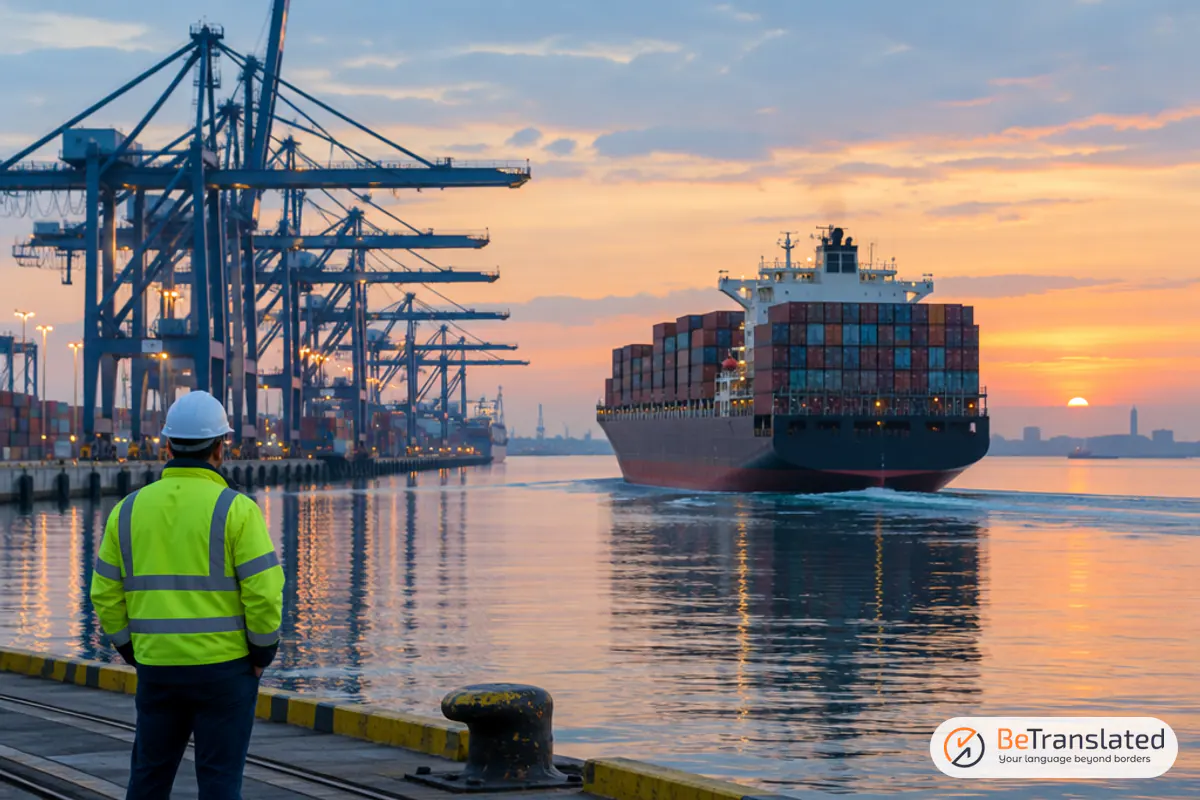
Why Green Businesses Have Better Chances of Success in Global Markets
Climate pressure, consumer demand, new regulation and brand trust all favor companies with a credible sustainability record. See the figures behind the trend and what it means when you sell across borders.


Why Sustainable Companies Win Customers in Global Markets
Executives have spent the last few years dealing with geopolitical conflict, economic uncertainty, supply chain disruption and talent shortages. Climate change still ranks near the top of their list.
70% of executives expect climate change to affect their company's strategy and operations to a high or very high extent over the next three years, up from 61% the year before. The survey covered more than 2,100 executives in 27 countries.Source: Deloitte, "2024 CxO Sustainability Report", September 2024
That pressure creates a favorable environment for green businesses. Companies that already work this way have a head start when they enter a new country.
Consumer Demand and Preferences
Consumers keep asking for products that are eco-friendly and sustainable. Sales data from the United States backs this up.
According to McKinsey & Company and NielsenIQ, products with ESG (Environmental, Social, and Governance) claims outperformed products without them over five years of retail data.
Products making ESG-related claims accounted for 56 percent of all growth over five years, about 18 percent more than expected given their starting position. They averaged 28 percent cumulative growth, against 20 percent for products without such claims.Source: McKinsey and NielsenIQ, "Consumers care about sustainability, and back it up with their wallets", 2023
The authors point out that this shows a correlation, not proof that the claims caused the growth, and that results varied by category. Private-label products with ESG claims showed the most consistent upside.
ESG Claims Influence Purchasing Decisions
Products featuring ESG claims held a competitive advantage in the McKinsey data. That edge reflects a preference for brands that commit visibly to environmental and social responsibility.
The claim has to be understandable to the buyer, though. A sustainability message that is badly translated, or that cites a standard the local reader has never heard of, loses most of its value. Our translation services cover this kind of market-by-market adaptation.
Willingness to Pay a Premium
Many customers look for sustainable solutions and accept paying more for goods and services that are good for the environment. They want their money to contribute to a positive impact.
Brands that meet this demand with green products often see better margins and stronger customer loyalty, as long as the claim is credible in the buyer's own language.
Regulatory and Policy Support
Regulation, litigation and trade policy increasingly work in favor of green businesses.
Government Incentives
Many governments offer tax breaks, subsidies and other incentives for sustainable practices. These incentives help businesses reduce their operational costs while transitioning to eco-friendly methods.
Environmental Regulations and Legal Action
Stricter environmental rules level the playing field for green businesses and make unsustainable practices more expensive. Litigation over PFAS (per- and polyfluoroalkyl substances) is a clear example.
PFAS are called "forever chemicals" because they persist in the environment and in the human body for a very long time. TorHoerman Law notes that exposure may be linked to several types of cancer, thyroid disease and ulcerative colitis, and that people harmed by contamination may be eligible to take legal action.
Europe has its own case. In July 2022, 3M Belgium agreed with the Flemish government to commit more than €571 million to remediation and compensation after PFAS contamination was found around its Zwijndrecht plant.
3M Belgium committed more than €571 million, including €250 million for priority remediation actions, €100 million for the Flemish government and €100 million for the Oosterweel project.Source: 3M, "Agreement Reached Between the Flemish Government and 3M Belgium", 6 July 2022
Cases like this are why a company that sells in several countries needs its compliance documents, safety data and environmental declarations accurate in every language. Where an authority or a court asks for them, a certified translation is often what gets accepted, and the receiving body decides what it requires. Anyone following the issue from the claimant side can read more about the PFAS lawsuit process on the TorHoerman Law site.
Trade Agreements and Market Opportunities
Trade agreements that promote sustainability and environmental protection can open new markets for green businesses. Deals that encourage low-carbon trade and sustainable development make it easier to reach buyers abroad.
Companies that already meet the standards set by these agreements usually face fewer barriers to entry and can expand their global reach more effectively. Combined with consumer demand, this creates real room for growth in global markets. When you enter a market like the Gulf states, local rules and local language come together on the same page.
Brand Reputation and Trust
Green companies improve their reputation by showing their commitment to sustainability. Two advantages stand out.
Enhanced Trust
Customers are more inclined to believe in companies seen as environmentally friendly. Research published in the Journal of Product Innovation Management looked at how Tesla changed public perception of battery electric vehicles (BEVs). The authors credit product design that met traditional criteria such as driving performance, comfort and status, together with strategies to avoid blame for environmental trade-offs.
Tesla's well-received models overcame early skepticism, and the technology itself helped build trust. That perception then raised acceptance of BEVs as a whole.
The study draws on 54 interviews and nearly 2,000 pages of archival data.Source: Palmié, Miehé, Mair and Wincent, "Valuation entrepreneurship through product-design and blame-avoidance strategies: How Tesla managed to change the public perception of sustainable innovations", Journal of Product Innovation Management, 2024
Improved Customer Loyalty
When a brand shows real eco-friendly practice, customers form a lasting connection with it. That loyalty holds up against competitors and price differences, because buyers want their purchases to match their values.
Taking Your Green Message Across Borders
Sustainability only helps abroad if buyers, regulators and partners can read it. Reports, labels, product pages and press releases each need wording that fits the country they are read in, and speakers at international events need to be understood in real time.
If you are preparing an expansion, start with the BeTranslated homepage or ask for a quote for your documents. For conferences and investor meetings, our interpreting services cover simultaneous and consultative formats.