4 Practical French Learning Strategies That Actually Work
The French alphabet contains the same letters as English which makes French is one of the easiest languages for English speakers to learn. However, a little direction won’t hurt. If anything, it will expedite your learning process.

4 Practical French Learning Strategies That Actually Work
The French alphabet uses the same 26 letters as English - but with added accented characters like é, à, and ç. Combined with the fact that over 28% of English vocabulary derives from French, this makes French one of the most accessible languages for English speakers to learn.
However, a little guidance never hurts - and it can significantly speed up your learning process.
To help you out, here are practical, research-backed suggestions for learning French pronunciation, grammar, and vocabulary effectively - so you can master this beautiful language faster.
Start With the French Sounds and Accents
While the French alphabet shares the same base letters as English, accented vowels (like é, è, ê, ë) and unique consonant sounds drastically change pronunciation. For example:
J is pronounced “zhhee” (like the ‘s’ in “treasure”), Q as “koo,” and the French R is a guttural “rrr” sound made in the back of the throat - not “Air.”
When you learn French pronunciation, focus on mastering phonemes (distinct sound units) rather than relying on English spelling patterns.
French has 16 vowel sounds (including nasal vowels like on, an) and 23 consonants. As an English speaker, you already know about 20 consonants - but the new vowel sounds and silent letters are where most learners struggle.
Familiarizing yourself with the French IPA chart or using apps like Forvo or Speechling can give you instant access to native pronunciations.
Master Basic French Pronunciation Rules
French pronunciation follows consistent - but unfamiliar - patterns for English speakers. Here are three foundational rules:
1. Pronounce every vowel clearly: Unlike English, French rarely reduces unstressed syllables. “Je ne sais pas” is fully articulated - not slurred.
2. Stress the final syllable: French is syllable-timed, with light emphasis on the last pronounced syllable (e.g., ca-fé, not CAF-eh).
3. Apply liaison and elision: In “les amis,” the ‘s’ links to the next word (“lez-ami”). In “l’ami,” the vowel elides: “la + ami” → “l’ami.”
Practice with French tongue twisters like “Un chasseur sachant chasser sait chasser sans son chien” to train muscle memory and fluency.
Supplement this with daily listening: try podcasts (Coffee Break French), YouTube channels (Français Authentique), or TV5Monde for authentic input.
Memorize Noun Gender with Smart Strategies
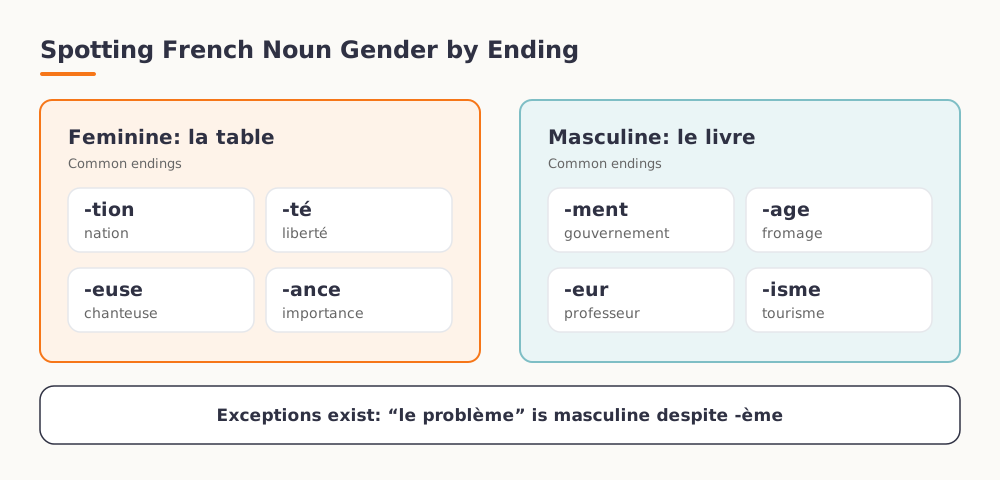
In French, every noun is either masculine or feminine - even “table” (la table, feminine) or “book” (le livre, masculine). Getting this wrong won’t block understanding but affects fluency.
Pro tip: Use color-coded flashcards (blue for masculine, pink for feminine) or sticky notes on household items. Apps like Anki or Memrise support gender-based spaced repetition.
Common feminine endings include:
- -tion (nation), -sion (extension)
- -té (liberté), -ée (idée)
- -euse (chanteuse), -ance/-ence (importance, présence)
Common masculine endings include:
- -ment (gouvernement), -age (fromage)
- -eur (professeur), -isme (tourisme)
- Most words ending in a consonant (e.g., le chat)
Remember: exceptions exist (e.g., le problème is masculine despite -ème). But consistent exposure through reading and speaking will internalize patterns over time.
Avoid False Friends and Outdated Clichés
Beware of “false friends” (faux amis) - words that look like English but mean something different. For example:
- Actuellement = “currently” (not “actually”)
- Librairie = “bookstore” (not “library”)
- Rendez-vous = any appointment (doctor, business, or romantic)
Avoid stereotypical phrases like “Oh là là!” or calling a server “garçon” - these sound outdated or even rude. Instead, use “S’il vous plaît” or “Excusez-moi” to get attention politely.
For professional contexts (e.g., international business or doctor appointments), precision matters - consider working with a certified translator for official documents.
Immerse Yourself - Without Leaving Home
True fluency comes from daily immersion. You don’t need to move to Paris - just integrate French into your lifestyle:
- Switch your phone/computer language to French
- Follow French Instagrammers or TikTokers
- Listen to French music (Stromae, Indila, Zaz)
- Cook using French recipes (Marmiton.org)
- Join language exchange platforms (Tandem, HelloTalk)
Set a goal aligned with the CEFR framework - start with A1 (beginner) and aim for conversational fluency (B1) in 6 to 12 months with consistent practice.
Remember: language learning isn’t about perfection - it’s about connection. And with these strategies, you’ll be pensant, plaisantant, et rêvant en français before you know it.