How to Maintain Your Language Skills as a Translator
As translators, our language skills are our main tool. Ideally, we become more proficient in all our languages, including our mother tongue, throughout our lifetime, but that is not necessarily the case. Just as our computers and CAT tools need updating, so do our linguistic skills.

How to Maintain Your Language Skills as a Translator
As translators, our language knowledge is our main tool. Ideally we become more proficient in all our languages, including our mother tongue, throughout our lifetime, but that is not necessarily the case.
Just as our computers and CAT tools need updating, so do our linguistic skills.
Depending on your situation, you may need to devote more or less time to your source or target languages.
A French to Spanish translator living in Madrid will have to work hard to keep their French up to scratch, finding all the opportunities they can to have contact with their second language.
That same translator living in Paris, however, will have different concerns; they will probably have more contact on a day-to-day basis with their second language than their mother tongue.
You may not think you need to work on your native language, but languages are always changing, and you don’t want your translations to sound old-fashioned and out of touch.
Remember that your target language writing skills are often considered more valuable than your source language comprehension.
This is why we have come up with a short guide that will help you maintain your language skills.
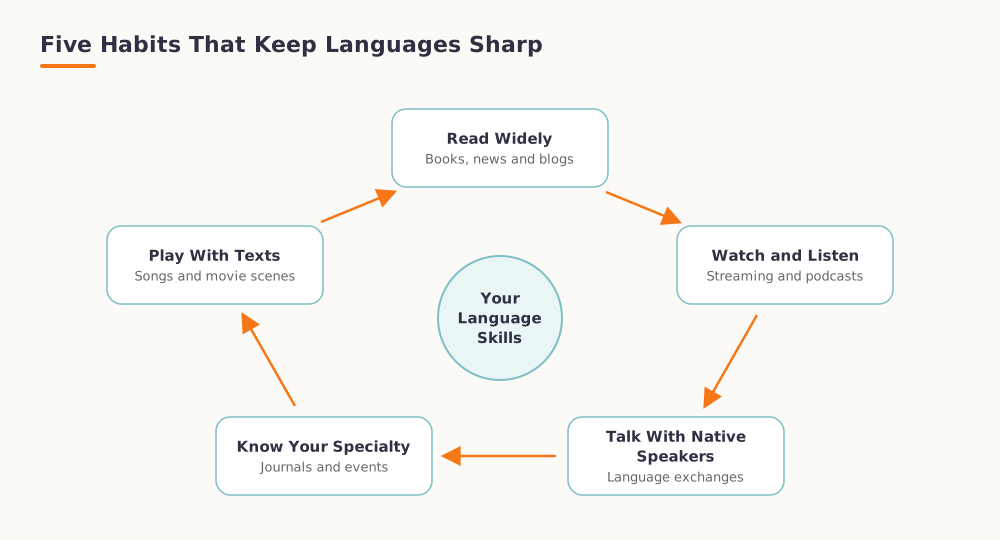
Reading Widely Enhances Linguistic Skills
Translation is all about the written word.
To be a top-quality translator, you need to be an observant reader.
Reading is one of the most effective ways to up new vocabulary and maintain your language skills without much thought, and it’s enjoyable too.
Make multilingual reading part of your daily routine; reading in your second language will increase language acquisition, while reading in your mother tongue will make you a better writer.
Your reading should be vast and varied; don’t worry if you’re not into novels, peruse the newspaper or follow blogs.
These days, it’s easy to access great writing in any language.
Movies and Podcasts Make Leisure Time Productive
Translators spend most of their working day reading and writing, so it’s understandable if reading in your spare time doesn’t seem very relaxing.
A great contribution to the improvement of language skills, and therefore work, could be television for you.
Check out streaming services like Netflix and Amazon Prime, where content is available in a multitude of languages.
Podcasts are also a great tool because you can listen while you work out, cook, drive, or do a hundred different tasks, meaning they are an efficient use of time.
These outlets are also a good way to keep up to date with the pop-culture and politics of the countries you work with; current knowledge of cultural contexts is important for translation.
Regularly Talk With Native Speakers Wherever You Live
There’s nothing like immersion in a language and culture, and of course, the best way to achieve that is spending time in the country, or countries, where the language you translate from is spoken.
Overseas trips aren’t always possible, but you can still have contact with native speakers from wherever you live.
Research language exchanges in your local area; events where you can meet like-minded people and practice languages you have in common.
Don’t worry if you live in the middle of nowhere, in these digital days there are many websites, such as Conversation Exchange and Speaky, which provide the option to share linguistic skills via video call, as well as in person.
It’s impossible not to maintain your language skills!
Focus On Your Specialization
As translators tend to specialize in specific fields, your knowledge of your source and target languages should be particularly strong in those areas.
Obviously, you will have continual contact with texts in your specialization in the documents you translate, but you should also be au fait with multiple facets of the topic and related subject matters, to ensure you don’t use out of date language.
If you are a medical translator, for example, read medical journals and attend conferences, which are also a great place to network. If you translate for the food industry, go to some wine tastings or read up on agriculture.
When it comes to maintaining a second language, people often roll out the old adage ‘use it or lose it’, but for professional translators, it’s important to be more specific and expand our specialized linguistic skills.
Challenge Yourself to Explore Your Languages
Have fun with your languages! If you’re looking for less intense ways to maintain your language skills, why not practice your translation skills on texts that you don’t normally work with?
Translate a song or try subtitling a few scenes of a beloved movie.
Play with translating out of your mother tongue and into your second language; you never know what these things might teach you.
If you are looking for a professional translation service, BeTranslated’s network of qualified and experienced translators are the perfect choice.
Get in touch for more information or a quote.