Gain Flexibility by Becoming a Freelance Translator
Through offering a specialized skill, a translator can earn a solid salary when working for a company. As a freelancer, the earning potential is often higher.


Why Freelance Translation Offers More Flexibility
Through offering a specialized skill, a translator can earn a solid salary when working for a company.
However, as a freelancer, the earning potential is often higher, and many who quit their job to become freelance translators end up earning more as a result.
That earning potential is holding up well in 2026, particularly for freelancers who pair their specialization with AI tools rather than compete on volume alone.
Freelancers doing more complex, AI-augmented work saw earnings rise 45% in the first quarter of 2026.Source: Upwork, "The Future Workforce Index 2026: AI, Freelancing, and the New Value of Work"
For a translator who already has deep subject-matter expertise, that trend rewards specialization rather than punishing it.
The main benefit of freelancing, however, is the flexibility it offers.
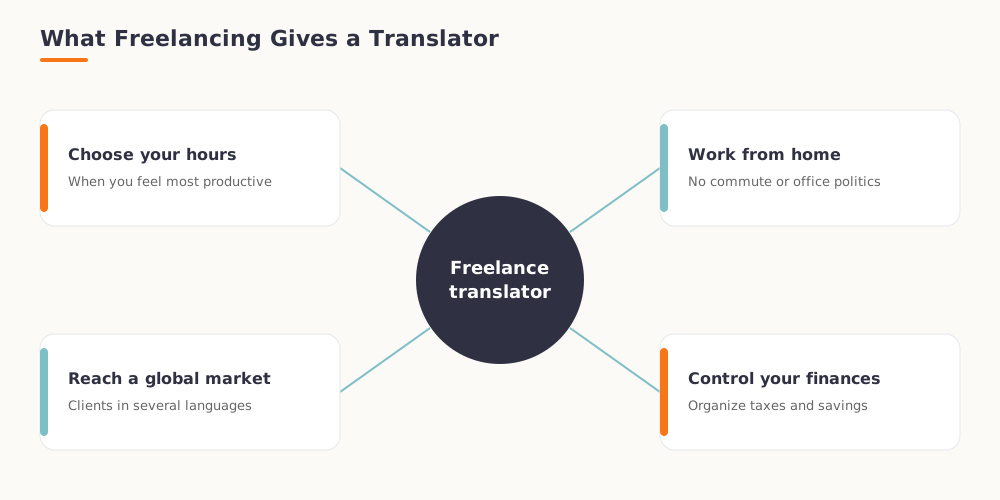
This leads to increased income by allowing you to work when you feel most productive.
It also leads to a more balanced life, as you strip away office politics and commutes for the comfort of working from home. Here are some advantages to becoming self-employed while you offer translation services to different organizations.
Taking Advantage of a Global Market
There are billions of websites online, and every one of them is a potential client for a translator.
The most successful of these will be advertising and selling services to customers all over the world.
Furthermore, large global companies are major employers, which means there are plenty of opportunities to work for a global organization.
Companies on the Fortune 500 list employed nearly 27 million people in 2014, about 17% of the U.S. workforce.Source: Fortune, "Fortune 500 Most Employees", June 13, 2015
As a freelancer, you’ll be able to work for several of these companies at any time.
Most websites require a regular stream of content, but an international website will need this in several languages.
This is something a translation specialist can achieve without leaving the house.
Take advantage of this global market by becoming self-employed.
Control Over Your Finances
Becoming a freelancer requires a step-up in terms of responsibility, but this can be to your benefit.
You won’t have to rely on an employer paying you the right amount each month and making the relevant deductions.
You’ll be able to organize your finances in a way that works for you, taking control of your loan repayments, taxes, and savings.
If you are smart - or can hire an accountant to be smart on your behalf - you’ll end up keeping more of your earnings.
Start by Supplementing Your Income
Becoming a freelance translator requires a huge transition and reorganization of your life.
Don’t expect to do it overnight.
At some point, you are going to have to take that great leap of faith, but don’t just quit your job with no plan in place.
Carry on with the day job, but spend weekends and evenings picking up translation jobs online.
Over time, you’ll get the hang of finding and completing work until you’re confident that you can resign from your job and start working remotely full-time.
Aim to have at least three months’ worth of living costs in savings before you switch to self-employed.
This will give you a cushion while you settle into your new life.
Translation is more than just a job for many people. It is a passion for language combined with a desire to provide an important service to individuals and organizations.
With so much business occurring over the internet, it is possible to apply these skills from home.
Get to know the global market and enjoy the benefits of having complete control over your finances.
Start off slowly if you like, but rest assured that it is possible to earn good money as a freelance translator.