Mistakes Translators Make and How to Spot Them
In our globalized world hiring a top-quality professional translation service can make all the difference to your business, but finding the right language professional for you can be a challenge.

In a world as rapidly progressing as ours, business endeavors often cannot wait. And even if you and your client don’t share a common language, you have to communicate in order to close the deal.
Thanks to professional translation services, scoring that huge account with your German, Japanese, or Chinese-speaking customer should be a piece of cake.
For businesses that have extensive global partnerships, a reliable professional translation service is a major asset.
Hire the wrong agency, and prepare to witness language differences tear your hard-earned success into smithereens.
Bearing this in mind, finding the right professional translator for your project is critical.
You need to find a translator who understands your area of business and is able to facilitate successful communication between you and your current or potential clients.
This can be a daunting task when you are unfamiliar with the dos and don’ts of the translation industry.
Identifying the right translation agency for you and your business can be a process of trial and error, and you may work with a few duds before you land on your perfect service provider.
There are, however, a few red flags that you should look out for in order to avoid contracting a subpar translator.
Here are some of the most common mistakes professional translators make:
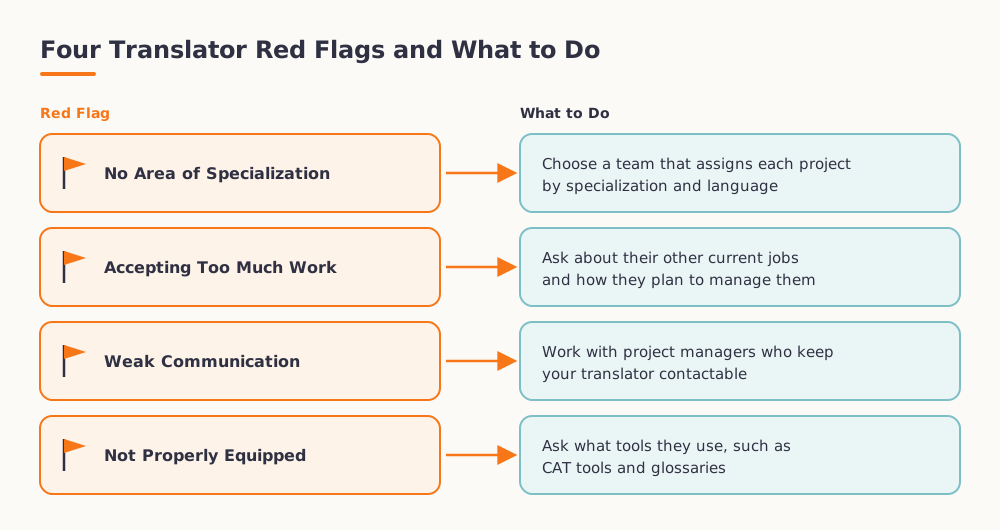
Having No Area of Specialization
Specialization is key. It’s impossible for a translator to be an expert in the terminologies and systems of every sector, so they tend to focus on a niche area that aligns with their experience, training, and interests.
A translator could, for example, work exclusively with legal contracts, information technology, or business documents.
By concentrating on one field, they are able to hone their skills and expertise and provide their clients with the highest quality translations.
If a translator claims to have a very broad range of specializations, this could be a red flag.
To be safe, look for a team of translators in which work is subdivided according to specializations and languages, such as BeTranslated, where skilled project managers take time to assign each project to the most appropriate language professional.
Accepting Too Much Work
For freelancers, the flow of work is not always consistent; there are times when the offers are flooding in and others where they can be scarce.
It’s pretty understandable, then, that some freelance translators take on more work than they can handle for fear of missing opportunities.
Hiring a translator who is working on too many projects at the same time, however, can be bad for you, the client.
However skilled a linguist they are, a translator is bound to get burned out or drop the ball if they accept too much work.
It may lead to the quality of the translations themselves being compromised or deadlines not being met, and either way, it’s bad news.
Before hiring a translator, be sure to ask about their other current jobs and ascertain how they plan to manage them.
Inability to Establish and Maintain Strong and Consistent Lines of Communication
Has your new translator been ignoring your calls and emails?
They are probably just hard at work pouring over documents you’ve submitted for translation, but, as the client, you need to know what’s going on, and any interruption from you should be prioritized.
Perhaps you need to inform them about an alteration in the text, and by not staying in touch with you, the translator could waste time working on an out-of-date version of the text.
Open lines of communication are very important, especially when it comes to business endeavors.
That’s why working with an agency that has highly competent project managers is advisable.
A good PM will make sure that your translator is contactable and help avoid misunderstandings.
Not Being Properly Equipped
In every sector, there are certain pieces of equipment, hardware, or software that are needed to do the job well.
The translation industry is no exception. In a professional translator’s figurative toolkit, you will find a high-performing computer with up-to-date security; translation memories and CAT tools; glossaries; and perhaps even voice recognition technology.
This equipment allows translators to work faster and makes sure that the tone and vocabulary choices in the text are consistent, while protecting the privacy of your documents.
This now extends to machine translation and AI tools. The 2026 European Language Industry Survey describes a sector reshaping around AI, with new professional profiles replacing old ones as AI takes over some services, so a translator who uses these tools is not a red flag in itself. The mistake is treating machine output as a finished product and skipping the human review that catches the tone, terminology, and context errors AI still misses.
Don’t be afraid to ask your translator what kind of tools they use.
Never doubt the skill and professionalism of your translator again; contact BeTranslated for information about our language professionals and get a free quote today.