Facilitating Global Engagement With Infographics Translation
Discover how multilingual infographics can strengthen your SEO strategy and encourage more diverse audience engagement. Boost your business through infographics translation!

Transform Your Infographics Into Global Assets: The Translation Guide
Remember that water cycle poster from school? Or those airplane safety cards you’ve pretended to read?
Those are infographics - visual storytelling at its finest. And if you’re only showing them to one language group, you’re leaving serious opportunities on the table.
Why Bother Translating Infographics?
1. Get Past Language Differences (Yes, Even With Pictures)
Here’s the thing: images alone can mislead. That clever icon you designed? It might mean something completely different in another culture. The data labels, captions, and annotations carry the critical context that makes your visual sing.
English reaches far, but not far enough. By translating your infographics into multiple languages, you’re not just expanding reach - you’re showing respect for your audience by speaking their language.
2. Boost Engagement (And Watch Those Shares Multiply)
People engage 3x more with content in their native language. It’s not just preference - it’s psychology.
When viewers see information presented in their mother tongue, they stop scrolling, they read deeper, and crucially, they share.
Working with an infographic design agency that understands multilingual design takes this further. They know how to make translated versions feel native, not awkward.
Without translation? Your beautifully designed infographic becomes visual wallpaper - pretty, but forgettable.
3. Dominate Global Search Results
Here’s your SEO advantage: multilingual content ranks in multiple markets. One infographic, translated into five languages, gives you five separate opportunities to appear in search results worldwide.
That’s five chances to capture attention, generate leads, and build authority.
The Smart Way to Translate Infographics
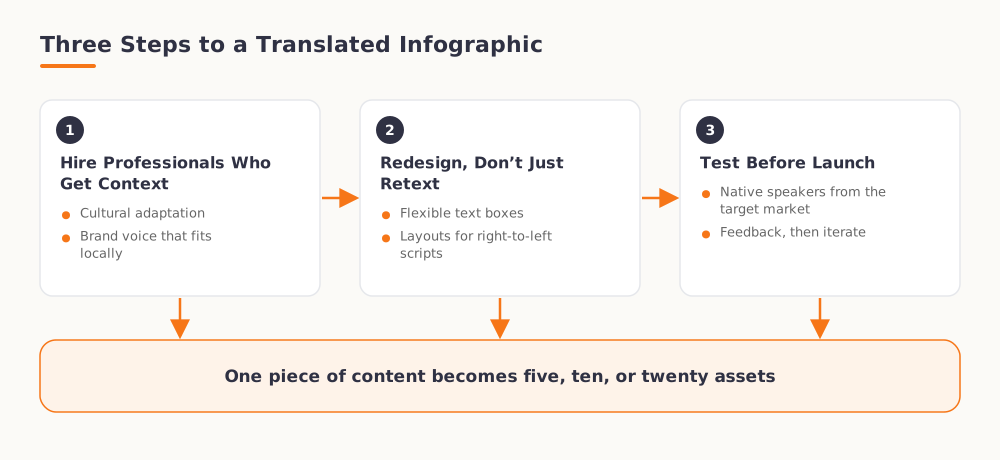
Hire Professionals Who Get Context
Translation isn’t word-swapping.
It’s cultural adaptation. Professional translators understand that “strong coffee” might need to become “intense coffee” in some markets, or that color symbolism varies dramatically across cultures.
You need specialists who combine language expertise with marketing savvy - people who can maintain your brand voice while making it resonate locally.
Redesign, Don’t Just Retext
Languages have personalities. German translations stretch 30% longer than English. Arabic and Hebrew read right-to-left.
Your design must flex to accommodate these realities without breaking.
This means adjusting text boxes, repositioning elements, and sometimes completely reimagining layouts. It’s not about squeezing words in - it’s about creating space for them to breathe.
Test Before Launch
Even perfect translations can fall flat if the cultural references miss the mark. Test with native speakers from your target market. Get feedback. Iterate.
A small testing investment prevents large-scale embarrassment.
The Bottom Line
Translating infographics isn’t an “extra” task - it’s a multiplication strategy.
One piece of content becomes five, ten, or twenty assets, each working to build your presence in a new market.
At BeTranslated, we handle everything from English and Spanish to Russian, Korean, and Albanian. We understand that translating visual content requires both linguistic precision and design awareness.
Ready to turn your infographics into global conversation starters? Let’s talk.