UI Strings and Interface Copy
Button labels, menu items, error messages, notifications, tooltips, and onboarding prompts localized within character limits. Terminology consistent across modules, tested against the live interface.
The difference shows up in the details users notice immediately: date formats, number separators, currency display, icon conventions, and the cultural frame around how features are described. A German user and an American user have different software expectations.
A Japanese user reads a different visual hierarchy. When those details are wrong, users lose trust quickly, and your support queue fills up.
Our technical translation specialists understand the specific constraints of UI copywriting: short labels for small buttons, consistent terminology across modules, character limits that vary by platform.
We work with all major website localization file formats and can integrate into your development workflow so releases do not stall waiting for completed translations. In markets like France and Canada, language law compliance adds a regulatory layer that we handle as standard.
Product demos, onboarding calls and partner training sessions work better with a live voice, and our remote interpreting services support them. Licence agreements and compliance statements for a European or US customer can be supplied as certified document translation.
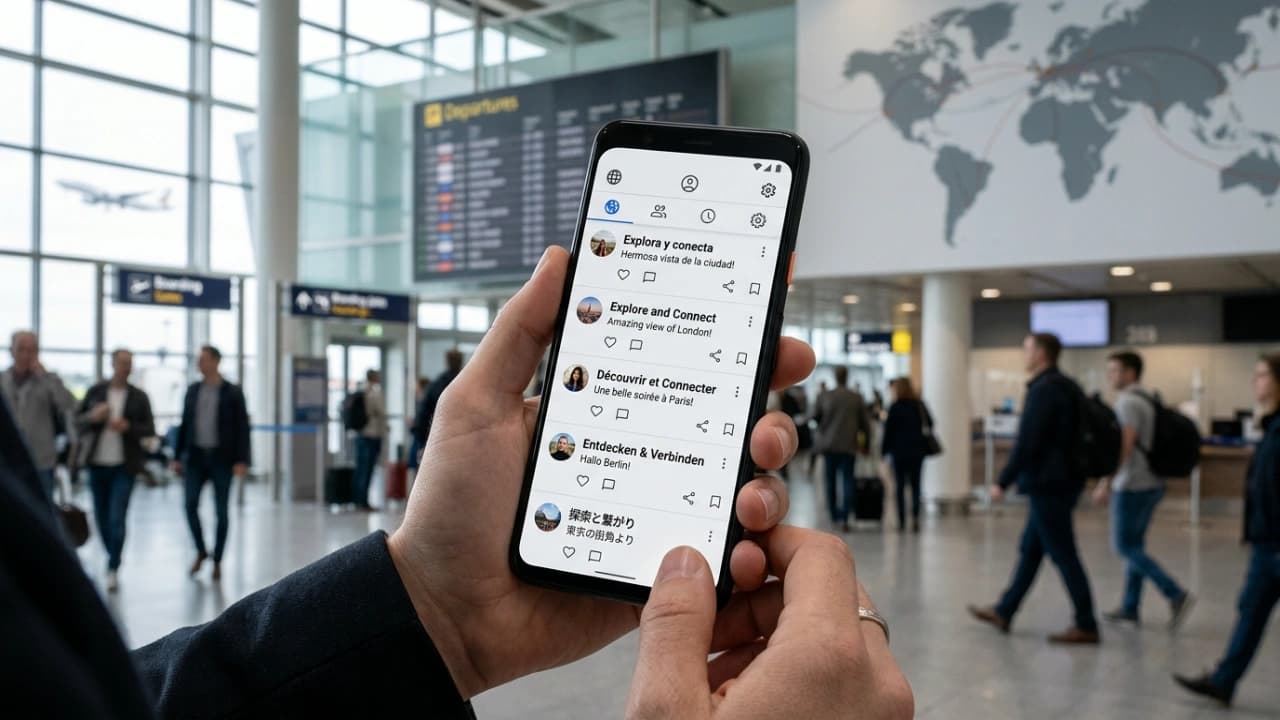
Button labels, menu items, error messages, notifications, tooltips, and onboarding prompts localized within character limits. Terminology consistent across modules, tested against the live interface.
Mobile app localization for iOS and Android: UI, push notifications, in-app messages, and app store listings. Right-to-left layout adaptation for Arabic and Hebrew. CJK character encoding verified.
Knowledge base articles, user guides, onboarding documentation, FAQs, and chatbot scripts localized into each target language. Consistent with the terminology used in the product UI.
Legal compliance localization covering terms of service, privacy policies, GDPR consent flows, cookie notices, and disclaimers for each jurisdiction. French and Canadian language law requirements handled as standard.
We work with .json, .xml, .po, .resx, .yml, .xliff, .html, and .srt files directly. No need to strip text from code: send us the resource files as-is and we return them translation-ready.
Agile and continuous localization for software that ships regularly. We integrate into your release cycle, handle incremental string updates, and maintain terminology consistency across versions.
Built for engineering teams that ship continuously. We slot into your release cycle rather than blocking it.
Target-market assessment, asset audit, glossary build, and locale priority list. We confirm encoding, layout, and regulatory requirements (French Toubon Law, Quebec Bill 101, RTL handling) before a single string is touched.
Translatable elements isolated from your codebase via CMS, TMS, or direct resource files. Strings extracted into XLIFF, JSON, or .po without exposing developers to translation tooling. Tag and placeholder integrity preserved.
Native-language software specialists translate with full context: source language, screenshot reference, character limits, and component IDs. Pure human translation by default; MT plus full human post-editing available for high-volume string banks.
Layout adjustments for German and Spanish text expansion, RTL mirroring for Arabic and Hebrew, font fallback for CJK, and date and number format updates. We flag truncation and overflow risks before QA, not after.
Localized builds tested on real devices and locale settings. Verify that strings render correctly, currency and units convert, sort orders behave, and the product flows the way it does in the source language. Issues logged in your tracker, not ours.
Independent native-speaking review of the live UI with a focus on tone, terminology consistency, and cultural fit. LQA scores and revision rounds tracked. Final sign-off by a senior linguist and your product owner before release.
New strings flow into the same translation memory and glossary on every release. We integrate with GitHub, GitLab, Phrase, Lokalise, Crowdin, or your in-house pipeline. Velocity stays high; consistency stays tight across versions.
“Very polyvalent and capable office. I got assisted and coached very well by Mike to achieve my business goals by implementing an effective approach to AI in the areas…”
“Amazing service! Very professional and quick. Greta communication via WhatsApp and email. I needed my documents very last minute and BeTranslated bent over back to help…”
“It is a real pleasure to work with the BeTranslated team who has been very professional, flexible and responsive during all projects.”
Translation focuses on converting text between languages. Localization adapts the entire user experience, including date and number formats, currency, icons, UI conventions, and cultural context, so the software feels native to users in the target market.
For software products, localization consistently outperforms simple translation in user adoption and retention.
Machine translation can accelerate the process for high-volume string files, but human review by a native-language software specialist is required. UI copy has strict character limits, requires consistent terminology across modules, and must match the tone and conventions of the target market's software culture.
We offer MT with post-editing for cost efficiency on large projects.
German and Spanish text can be 20-30% longer than the equivalent English, which breaks UI layouts if not handled at design stage. We flag expansion risks during translation and work with your development team to adjust string length constraints, truncation rules, and responsive layout behavior.
Yes. We integrate into agile release cycles, handling incremental string updates between sprints. We maintain a project-specific glossary and translation memory so new strings stay consistent with existing localized content. Contact us to discuss your release cadence and we will propose a workflow.
Get a free quote for your software localization project. Send us your resource files and target languages and we respond quickly with timeline and pricing.