How to Identify a Translation Scammer
Fake translators flood agency inboxes with mass emails, bogus CVs, and impossible rates. Learn the red flags and how to vet any translator before you pay.
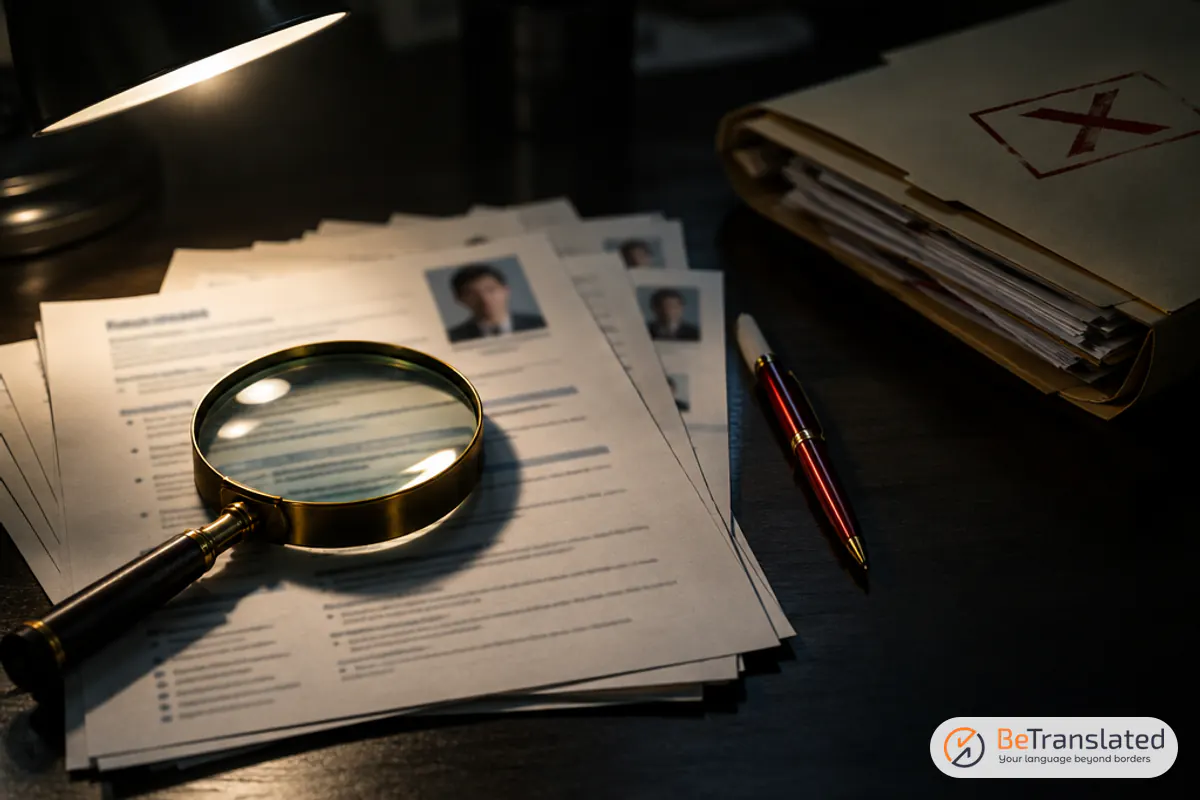
How to Spot a Translation Scammer Before You Pay
Fake applicants are no longer a fringe problem. Screening firms now find discrepancies in most hiring pipelines, and a growing share of the fraud involves stolen or invented identities rather than a few padded lines.
More than three-quarters of respondents uncovered candidate discrepancies in the past 12 months. One in six said their business had already experienced identity fraud during hiring, and another three in 10 were unsure. Source: HireRight 2025 Global Benchmark Report, based on more than 1,000 HR, risk and talent acquisition professionals worldwide
Remote hiring makes impersonation easier, and translation work is almost always remote. Gartner expects fake candidates to become routine within a few years.
6% of job candidates admitted to interview fraud, either posing as someone else or having someone else pose as them. Gartner predicts that by 2028, one in four candidate profiles worldwide will be fake. Source: Gartner press release, July 31, 2025, citing a 2Q25 survey of 3,000 job candidates
What the Latest Resume-Lie Data Shows
Job seekers admit it too when the survey is anonymous. Nearly half of US applicants say they have bent the truth somewhere between the application and the offer.
44% of Americans admit they have lied in the hiring process. Source: Resume Builder survey of 2,000 US residents who have applied for a job, conducted by Pollfish in January 2025
A StandOut CV survey breaks resume dishonesty down by age, and the gap is striking. Younger applicants lead by a wide margin.
Share of respondents who admitted lying on their resume: 80.4% of 18 to 25 year olds (Gen Z), 64.9% of 26 to 41 year olds (millennials), 58.2% of 42 to 56 year olds, 40.5% of 57 to 65 year olds and 46.9% of those aged 65 and over. Source: StandOut CV survey of 2,102 US adults employed during 2023, page updated March 25, 2025
Across all ages, the same survey found that most people have stretched the truth at least once.
More than three in five people (64.2%) said they had lied on a resume at least once, with men (65.6%) slightly ahead of women (63.3%). Source: StandOut CV, same survey of 2,102 US adults
So how do you catch a translation scammer before the first invoice? It starts with knowing where the lies usually sit.
Be Wary of the Most Common Resume Lies
Recruiters say the skills section is where candidates stretch the truth most, bending it to match the job requirements. Another common trick is leaving out a past employer to hide a dismissal or a conflict, a gap that often slips past HR verification, even with recruitment technology in place.
Work experience, age and qualifications round out the usual list, alongside:
- Knowledge of foreign languages
- Computer skills
- Reasons for leaving previous roles
- Undisclosed bad habits
Surprised that people lie about foreign languages? Faking fluency sounds hard, yet remote agencies field a steady stream of applicants who are nowhere near professional translators.
Key Ways to Identify a Translation Scammer
A trained eye spots a fake translation resume fast. Skip any application that shows the following signs.
Beware of Mass Emails and Bulk Recipients
Check who else received the email. Dozens of other addresses usually means a mass blast, so delete it without a second thought.
Spot the Red Flags in a Translator’s CV
A resume written in poor English is a problem. The odd slip happens, but a claim to translate to or from English paired with sloppy writing is a deal-breaker.
Language mistakes of any kind are a red line for linguists, as our roundup of resume mistakes translators make shows.
Steer Clear of Inflated Language Claims
Some specialists work fluently in several languages. An offer covering many unrelated languages should still set off alarms, because odd combinations often mark a translation scammer rather than a seasoned freelance translator.
Question Those Rock-Bottom Translation Rates
Be suspicious of anyone willing to work for unusually low translation rates. A real professional knows the work involved and will not accept a fee below a reasonable rate, a point we cover in our look at translation quality.
Watch Out for Unrealistic Project Volumes
Even hard-working translators hit a daily word ceiling. Anyone promising huge volumes within 24 hours will deliver poor quality, often raw machine translation, so steer clear.
Working with an applicant who shows these traits puts your time, reputation and money at risk. It is the kind of freelance nightmare every agency wants to avoid.

Don't Unfairly Penalize Legitimate Freelancers
Not every unconventional detail is a red flag on its own. A personal Gmail or Outlook address, no history of video calls, reluctance to share an ID before a contract is signed, or a varied early career are all common among genuine, experienced linguists.
That holds especially for linguists early in their careers or based outside regions with heavy LinkedIn use. Weigh these details alongside the warning signs above rather than rejecting a candidate over a single one.
Scams That Target Freelance Translators
Fraud runs in both directions. Translators who answer an offer face fake clients and sham agencies, and the habits that protect an agency protect a freelancer too, as Tradupreneurs (in French) lays out.
The Too-Good-to-Be-True Offer
An unsolicited message lands by email, on LinkedIn or in a messaging app, offering a large project at rates far above the market. The Chartered Institute of Linguists warns that tight deadlines paired with disproportionately high rates should prompt suspicion.
The Overpayment Refund
The client "accidentally" sends more than the agreed fee, usually by check, and asks you to refund the difference before the original payment bounces. A variation asks for a small fee to release your payment from a supposedly blocked transfer.
Both end the same way: the money you send is gone, and the original payment never clears.
The Free "Test" That Is the Whole Job
A prospective client asks for a long sample, or the full document, as a trial of your skills. Once the translation is delivered, the order disappears and the contact goes silent.
Keep any unpaid test to a short excerpt. A request for the whole document is a sign that the job itself is the test.
Paying to Get Work
Some fraudsters sell certifications, portal registrations or "revolutionary tools" that supposedly unlock access to clients. Real clients do not charge a translator for the privilege of working for them.

Scams That Target Agencies and Clients
Here the usual weapon is identity theft. A stolen name looks professional right up to the first delivery.
CV Theft and Borrowed Identities
Fraudsters copy a real translator's CV from an online directory, change the contact and payment details, and apply to agencies in bulk. Ontranslation (in French) describes how the work that comes back is raw machine translation, or the output of a professional hired at the lowest rate, with invoices sent to a PayPal address that does not match the supposed translator.
The real translator pays too, since their name ends up attached to poor work. Sharing a LinkedIn profile instead of a downloadable CV makes theft harder, a tip Tradupreneurs gives freelancers.
Look-Alike Email Addresses
A fraudster creates an address that copies the name of a project manager at a known agency, then invoices for translations nobody ordered, sometimes backed by fake email screenshots. TradOnline (in French) stopped one such attempt because every real project carries a unique project number, which the fake invoice lacked.
Match any invoice or order against your own project records instead of trusting the email alone.
More Red Flags on the Client Side
These signals turn up again and again in the cases above:
- Unprofessional channels: a contract negotiated only over Telegram, WhatsApp or another instant messenger
- Free email domains: a supposed company writing from a Gmail or Yahoo address instead of its own domain, which CIOL says should raise a flag unless there is a reasonable explanation
- Reverse payment: fees, advances or software purchases demanded to "validate" your access or release a transfer
- Abnormal urgency: impossible deadlines with no signed quote or purchase order
The free-domain flag applies to a company or an agency, not to an individual freelancer. As the fairness section above explains, a personal address alone says little about a translator.
How to Counteract a Fraudster
Suspect a scam? Work through these steps before you commit.
Look for the Person Online
Modern tools make background checks easy, so see whether the translator has a website or profile and read the reviews there. Check their LinkedIn profile for a consistent work history, and if they claim membership in a professional body such as the ATA or ITI, confirm it in that association's public member directory rather than taking the claim at face value.
Then make sure the name is not on scammer directories. If you have a phone number, call it to check it is real.
Check the Email Header, Not Just the Message
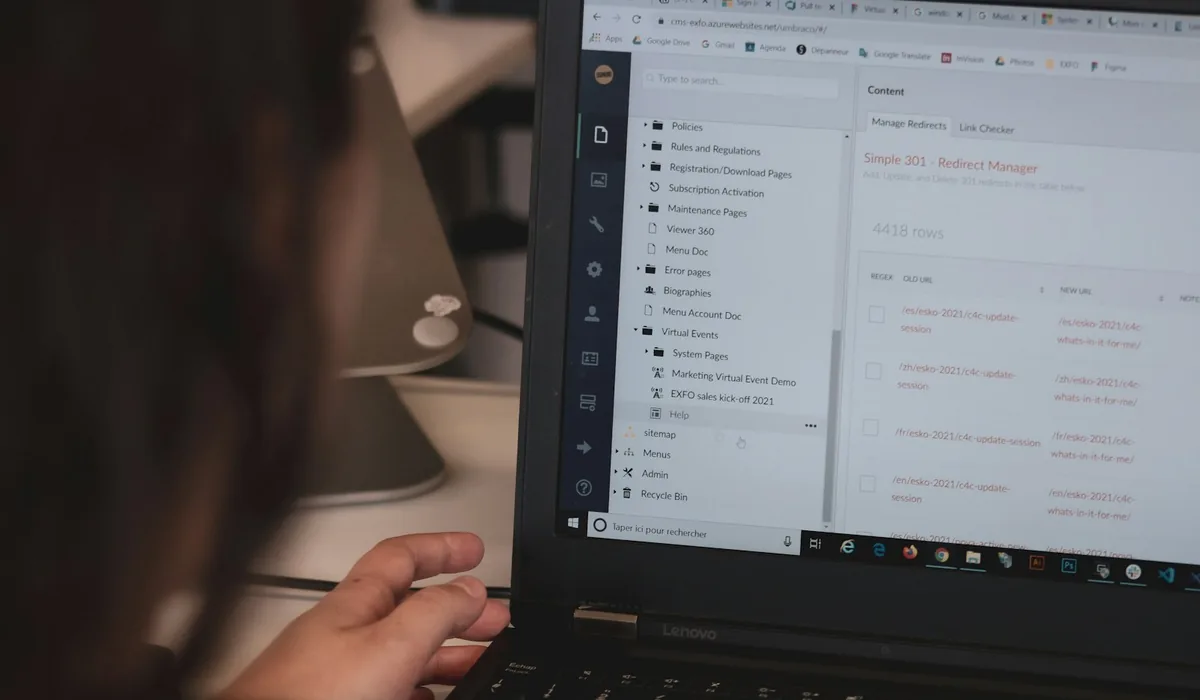
A sender's claimed location does not always match where their email actually originated. Open the message's full headers, using "Show original" in Gmail, and compare the IP or routing data against the country they claim to work from.
A mismatch alone is not proof of a scam, but it is worth weighing alongside the other signs.
Check the Resume for Plagiarism
Free tools let you check a CV for duplicates online. If the same text turns up under different names, the application goes straight in the trash.
Ask for References
A real professional, the kind behind genuine human translation, gladly shares client or employer references so you can confirm them. A scammer simply vanishes.
Conduct a Video Interview
A quick video call matches the resume photo to a real person. It also shows fast whether you are talking to a genuine linguist or an amateur.
Ask for a Test Translation
A test translation checks real ability. Some scammers lean on a native speaker for help, so ask follow-up questions to confirm the work is their own.
Verify the Company
Whether you are vetting a client as a freelancer or a supplier as an agency, look the business up in its national company register. Check the company number, the tax or VAT ID and a real street address, then confirm that the email domain matches the company's own website.
Never Pay to Get Paid
Refuse any request to send money in order to receive money or access to work, whether it is called a fee, a deposit or a software license. A genuine client's payment never depends on yours.
Get a Signed Quote or Purchase Order
Work from a signed agreement or purchase order that sets out the scope, deadlines and payment terms, as CIOL recommends. With a new client, consider asking for a partial payment up front before you start.
What to Do if You Find a Fake Translator
Report any suspicious person to the Translator Scammers Intelligence Group, sparing other victims a lot of time and money. Share the names with colleagues and the platforms you work on.
Not sure about an offer? Note three things before you reply: the channel it came through, the type of job it proposes, and the sender's email address or agency name. Searching all three against scammer directories often settles the question quickly.
Together, the industry can limit the damage scammers cause, and strong agencies are part of how translation companies succeed. Protecting your own files matters too, which our guide to secure translation work covers, alongside broader cybersecurity for translation businesses.
Translation Scammer FAQs
What Is the Biggest Red Flag of a Translation Scammer?
Mass-blasted emails to dozens of recipients, paired with rates far below market and promises of impossible daily volumes, are the clearest signs you are not dealing with a professional translator.
How Can I Verify a Translator Before Hiring?
Run an online background check, ask for references and a short test translation, and hold a video interview to match the person to their resume.
Why Do Scammers Target Translation Agencies?
Remote hiring and high job volume make agencies easy targets. A convincing CV and a borrowed sample can slip through without the face-to-face check every translation service provider should run.
Are Cheap Translation Rates Always a Scam?
Not always, but rock-bottom rates often signal an amateur or a scammer. Experienced linguists price their work to reflect its difficulty, as our piece on translation quality explains.
Where Do I Report a Translation Scammer?
Report them to the Translator Scammers Intelligence Group and warn your colleagues and platforms, which protects the wider translation community.
How Do I Spot a Fake Client or Agency as a Freelancer?
Look for a free email domain, an offer sent only through a messaging app, rates and deadlines that make no sense, and any request for money before work starts. Check the company in its national register, and ask for a signed quote or purchase order before you translate a word.
What Is the Overpayment Scam?
A "client" sends more than the agreed fee, usually by check, and asks you to refund the difference before the original payment fails. The check later bounces and the money you returned is gone, so wait until funds have fully cleared and refuse to refund any excess.
Skip the guesswork. At BeTranslated, every linguist in our network is vetted before we ever put them in front of a client, so you get a verified professional instead of a gamble.
Whether you need an English to Italian business document or a Spanish to French website, we have the right professional for you across all our translation services.
Request a free, no-obligation quote and work with a team that has already done the vetting for you, or call us on +34 962 02 22 22 (Spain) or +1 737 301 0606 (US).